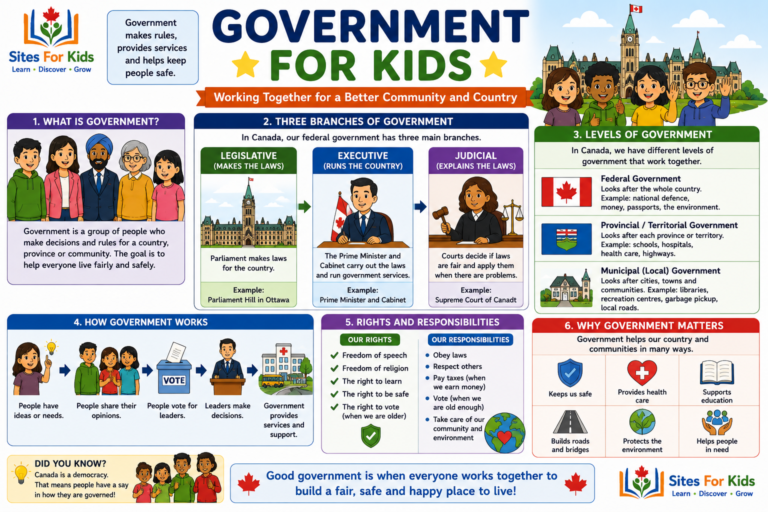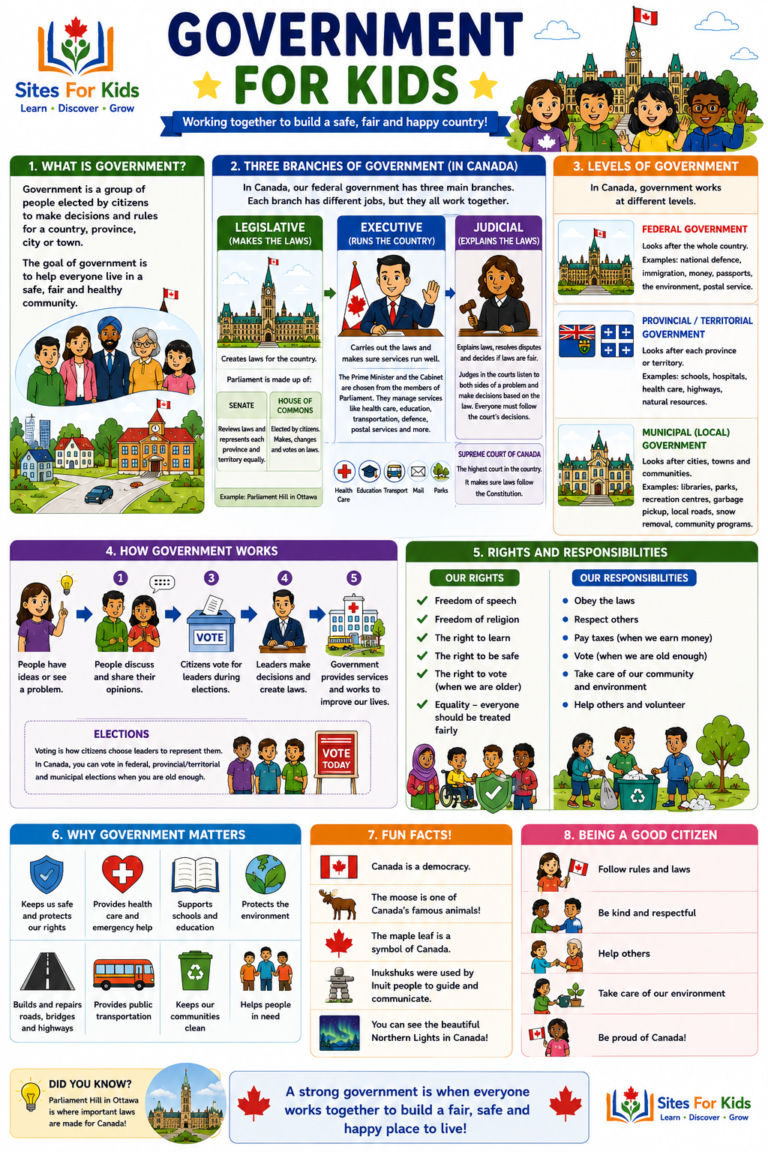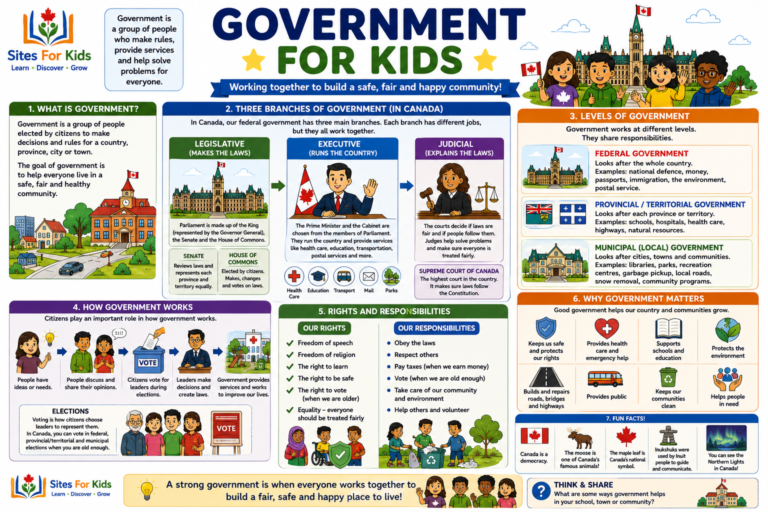
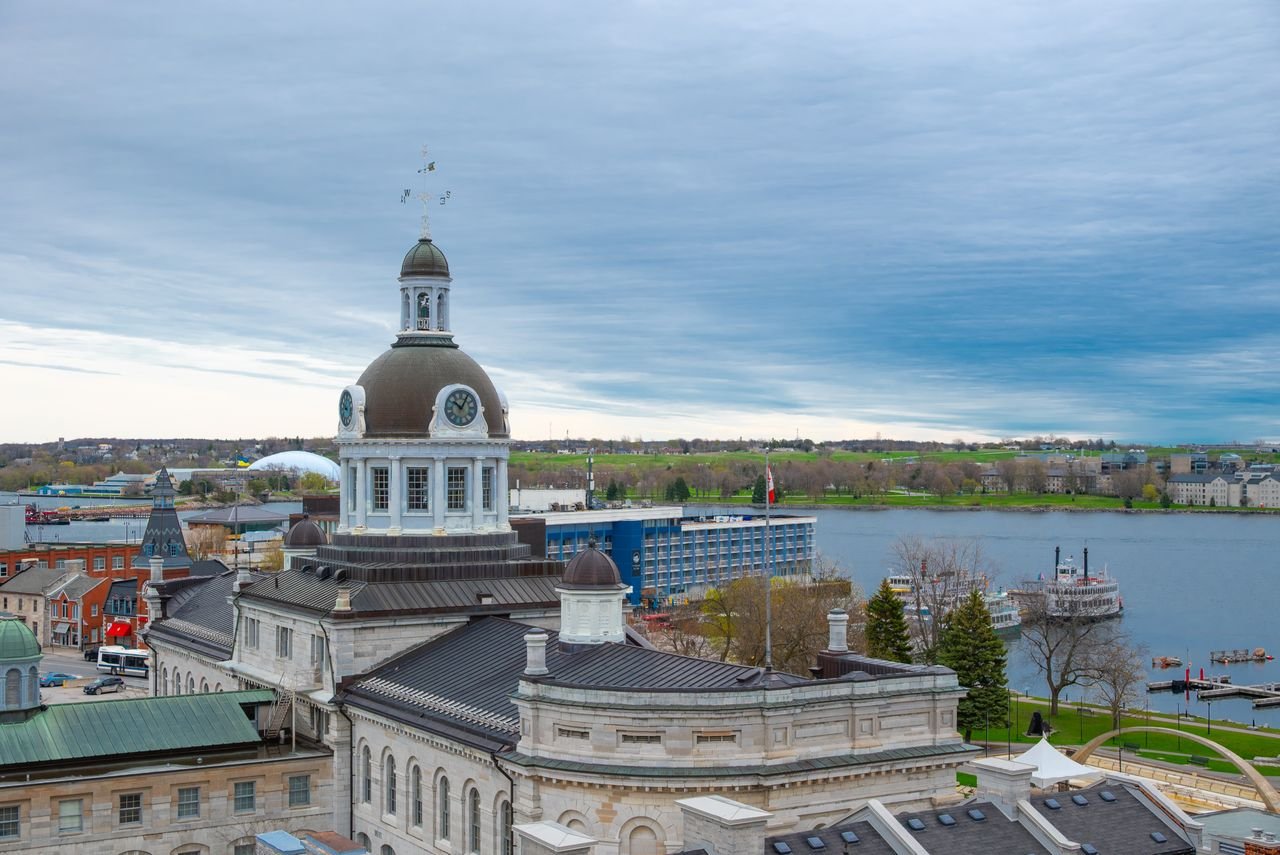
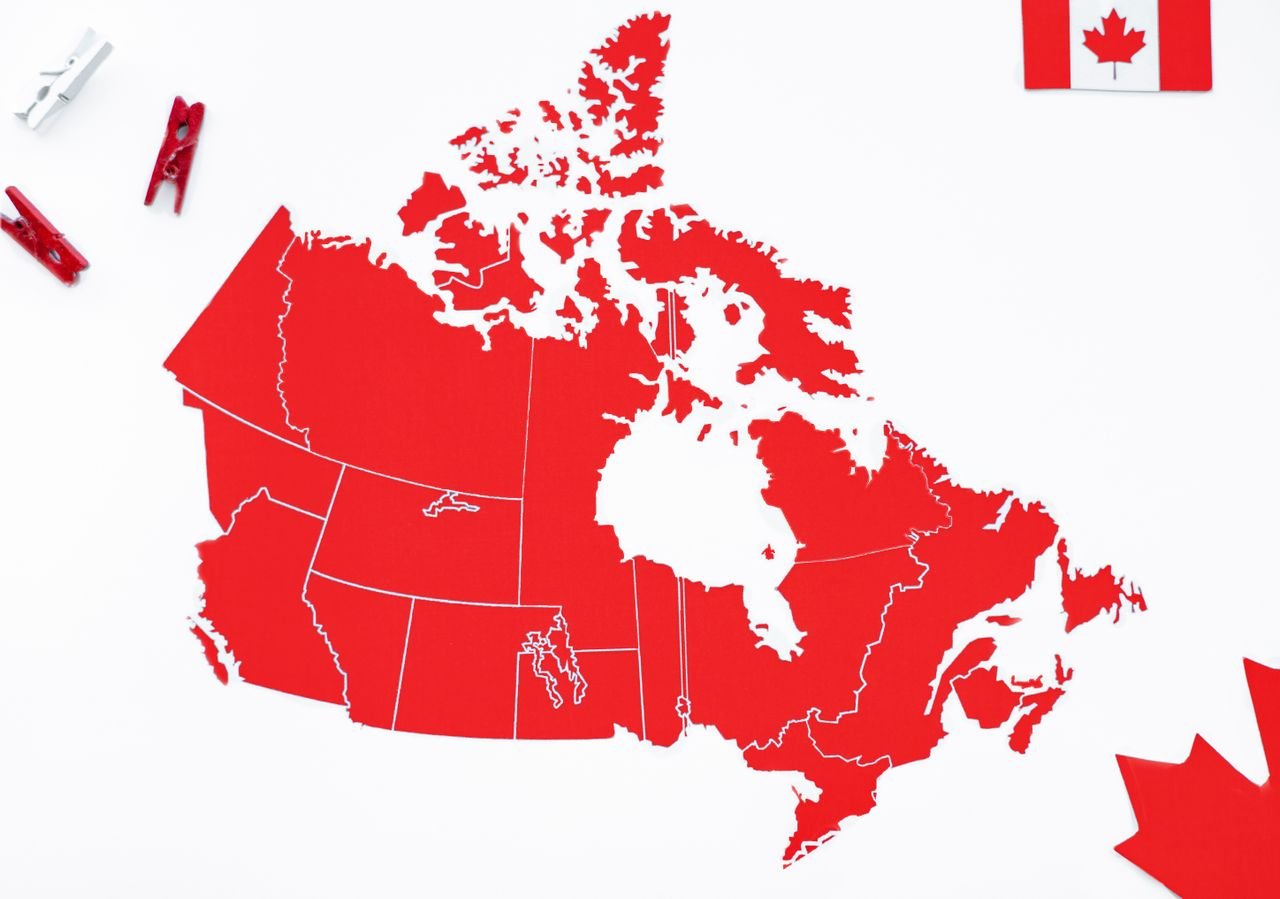
Each level of government has its own elected leaders and its own specific responsibilities, though sometimes different levels work together on shared issues, like public health during an emergency.
📜 How Laws Are Made
One of government’s most important jobs is creating laws — official rules that everyone in a community, province, or country must follow. Laws help keep people safe, ensure fairness, and create order.
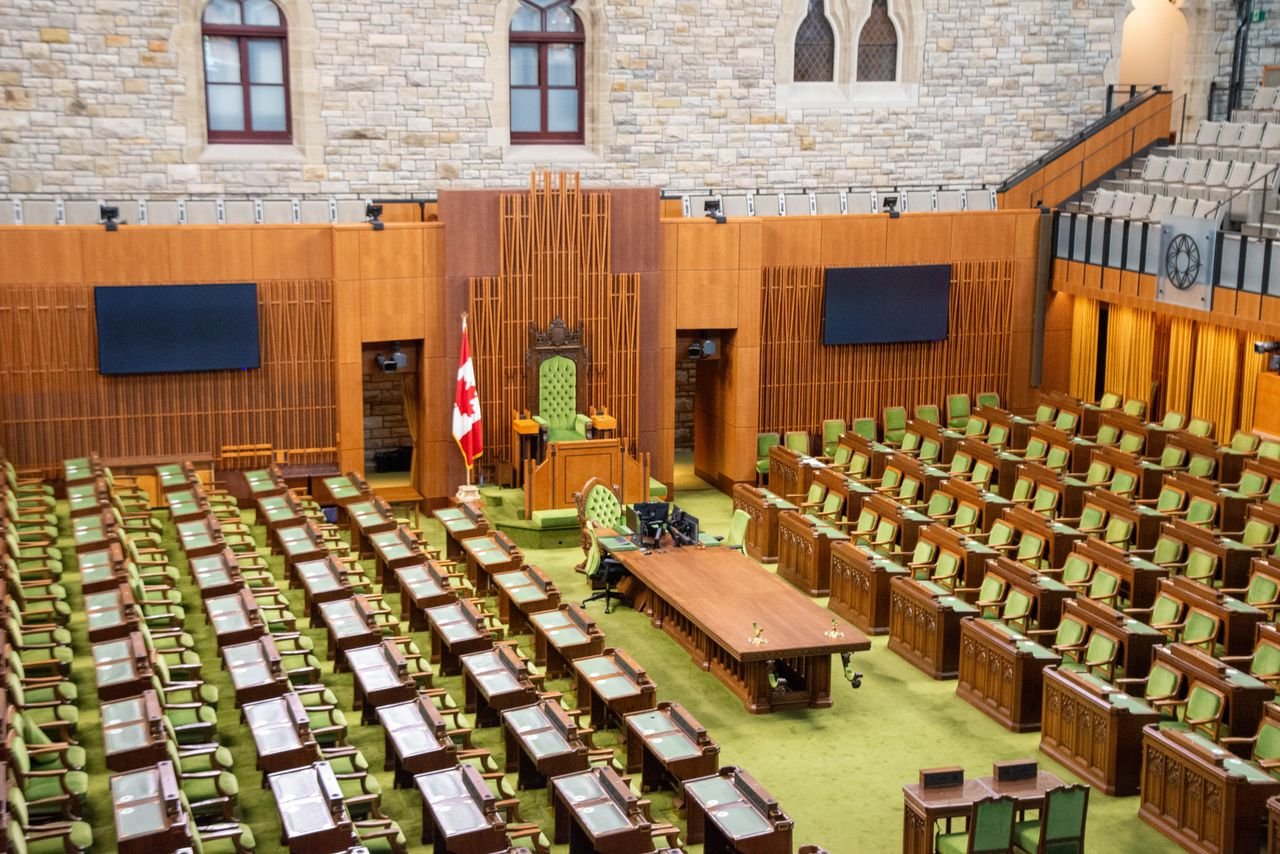
In many democratic countries, laws are made through a process that usually starts with an elected representative proposing an idea, called a bill. The bill is then debated and discussed by other elected representatives, who may suggest changes. If enough representatives agree, the bill is voted on. If it passes the vote, it becomes an official law.
This process is designed to make sure that many different voices and perspectives are considered before a new law is created, rather than one person simply deciding alone.
Why We Need Government
Some people wonder why government is necessary at all. The answer lies in how many decisions affect large groups of people at once. Imagine if every person could decide their own speed limit, or if there were no shared rules about clean drinking water. Chaos and unfairness would quickly follow.
Government exists to make decisions that benefit the community as a whole, even when individual opinions might differ. It also exists to protect citizens’ rights, ensuring that decisions are made fairly and that people are treated equally under the law.
Elected Representatives
In democratic countries, citizens choose their government leaders through elections. When citizens vote, they’re choosing the people they trust to represent their interests and make decisions on their behalf.
Elected representatives are expected to listen to the concerns of the people they represent and make decisions that reflect those concerns, even when it’s a difficult or complicated issue. This is part of why voting is such an important responsibility for citizens — it directly shapes who ends up making important decisions.
Government Services
Governments provide many services that most people rely on every day, often without even realizing it. These include public schools, road maintenance, clean drinking water systems, public healthcare (in many countries), police and fire protection, and public parks and libraries.
These services are usually paid for through taxes — money that citizens and businesses pay to the government, which is then used to fund these shared services.
Government and You
Even as a kid, government affects your daily life more than you might realize — from the school you attend, to the roads you travel on, to the parks where you play. Understanding how government works, at every level, helps you become a more informed and engaged citizen as you grow older, ready to participate in shaping decisions that affect your community and your country.