
Math Operations For Kids
The Four Building Blocks of Math.
Addition, subtraction, multiplication, and division are the four core operations every math skill builds on. Explore each one with simple, step by step lessons.
Learning Objectives
- Understand the four main math operations.
- Use addition to put numbers together.
- Use subtraction to find what is left or compare numbers.
- Use subtraction to find what is left or compare numbers.
- Use division to share or split numbers into equal groups.
- Solve simple word problems using the correct operation
What Are Math Operations?
Math operations are the actions we do with numbers. The four main operations are addition, subtraction, multiplication, and division.
We use operations every day. When we count total toys, share snacks, compare scores, double a recipe, or divide a pizza, we are using math operations.
Illustrations:
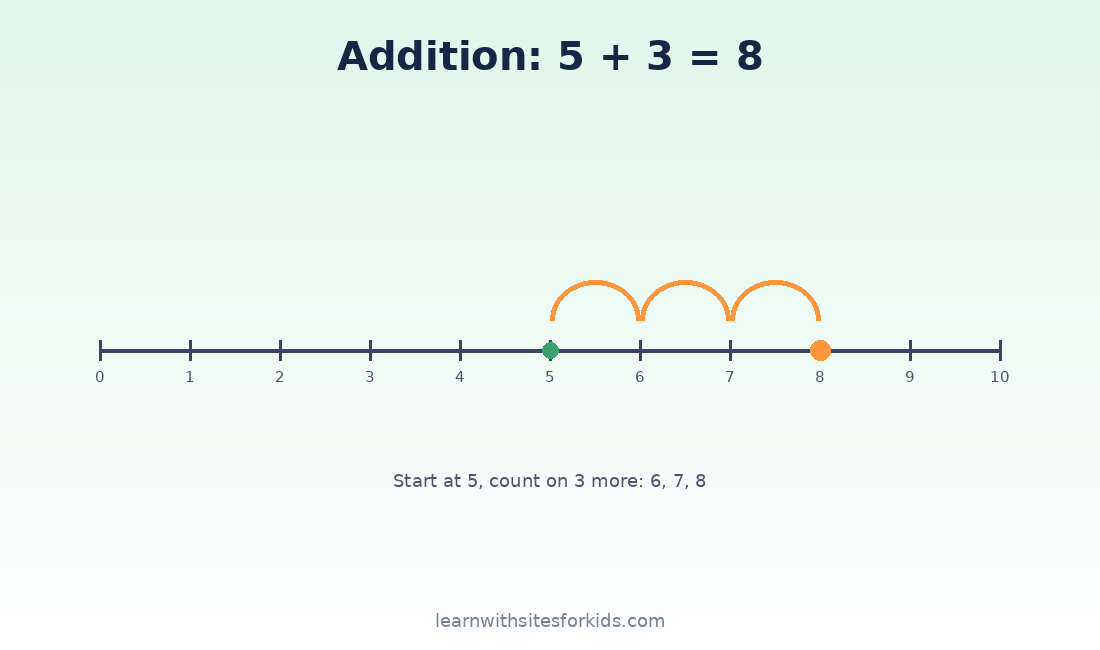
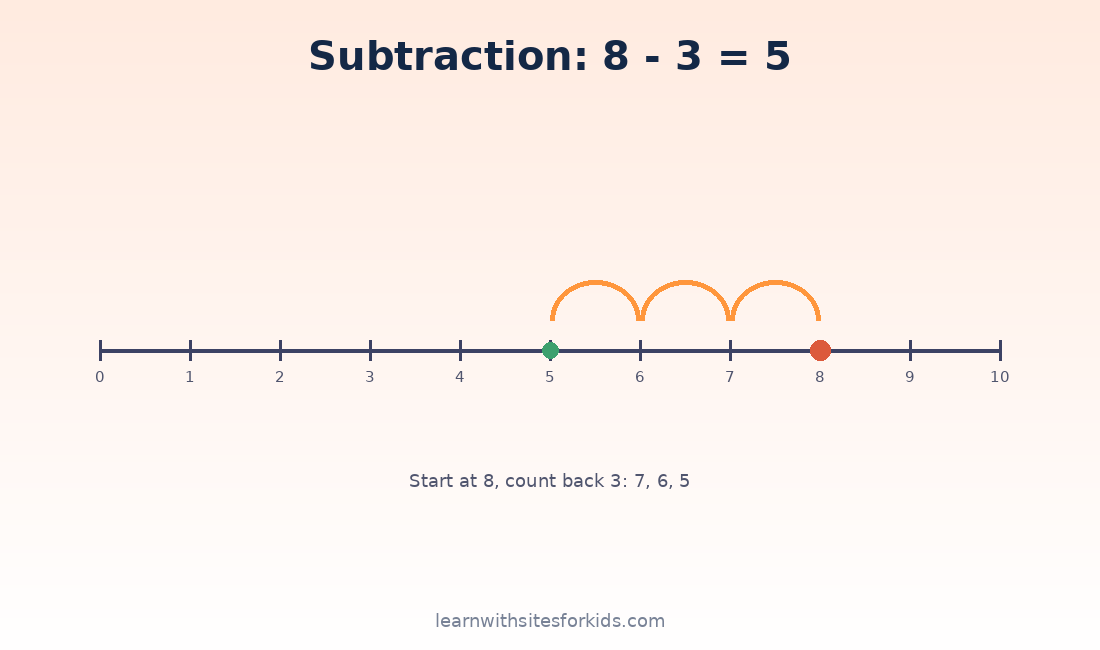
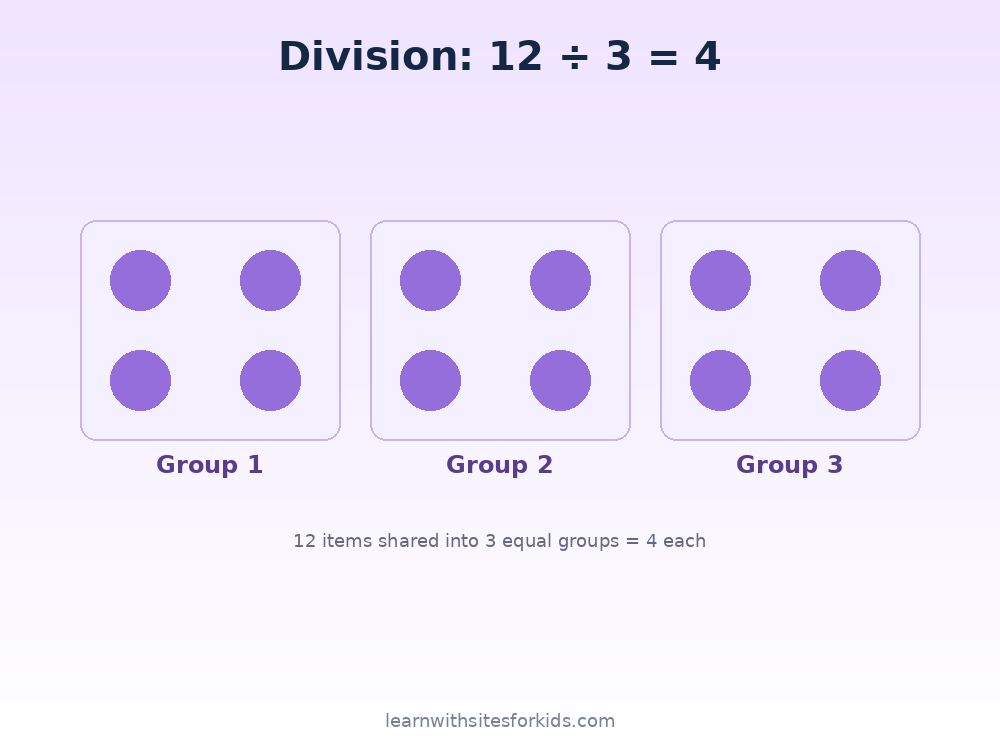
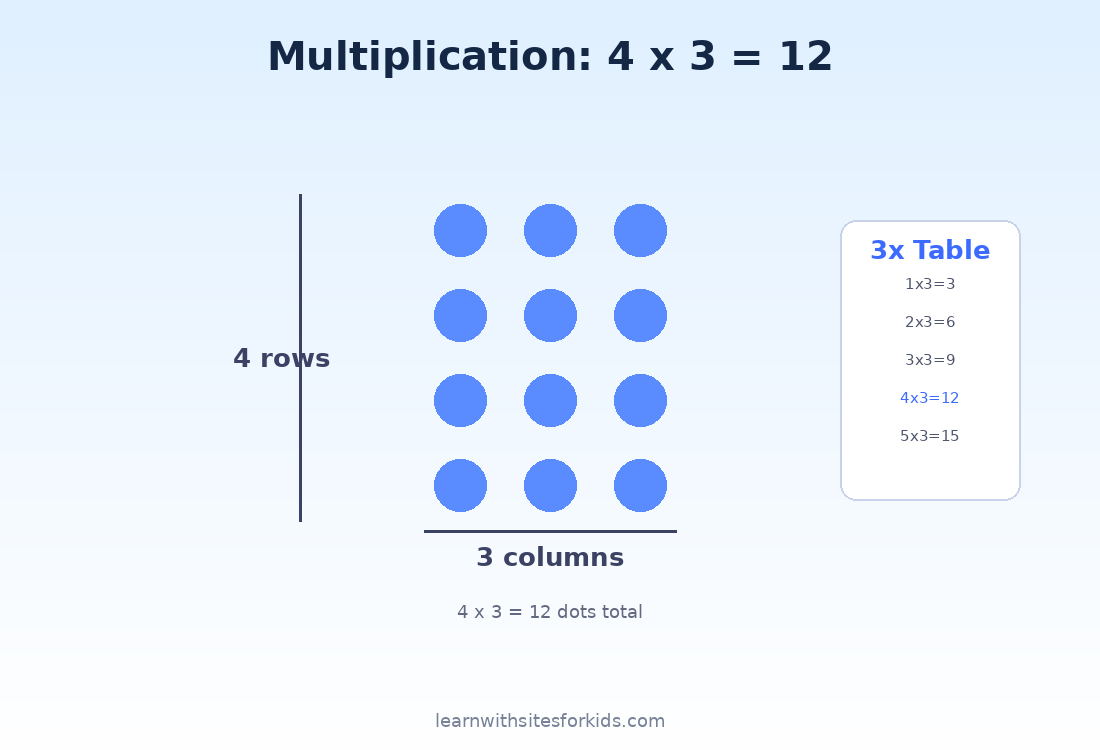
Explore Operations Lessons
Choose a math operation below and start learning step by step. Each lesson includes kid-friendly explanations, examples, worksheets, quizzes, and practice activities.
Addition
Learn how to add numbers, use number lines, count totals, and solve simple addition problems.
Subtraction
Learn how to subtract numbers, take away objects, find differences, and solve subtraction problems.
Multiplication
Understand multiplication using equal groups, arrays, repeated addition, and times tables.
Division
Learn how division works by sharing equally, making groups, and solving simple division problems.
Word Problems
Practice reading math stories and choosing the correct operation to solve the problem.
Fact Families
Learn how addition, subtraction, multiplication, and division facts are connected.
Order of Operations
Learn the correct order for solving math problems with more than one operation
Mental Math
Build fast math thinking with simple strategies for solving problems in your head.
Frequently Asked Questions
Math operations are actions we do with numbers. The four main operations are addition, subtraction, multiplication, and division.
The four main operations are:
Addition
Subtraction
Multiplication
Division
Kids usually learn addition first, then subtraction. After that, they learn multiplication and division because those operations build on the idea of equal groups.
Addition means putting numbers together to find the total. For example, 2 + 3 = 5.
Subtraction means taking away or finding the difference between numbers. For example, 8 – 3 = 5.
Multiplication means adding equal groups. For example, 4 × 2 means 4 groups of 2, which equals 8.
Division means sharing or splitting into equal groups. For example, 12 ÷ 4 = 3 means 12 is shared into 4 equal groups, with 3 in each group.
Kids can practice by using toys, snacks, number lines, flashcards, math games, worksheets, and real-life examples like sharing food, counting money, or adding scores in a game.