Citizenship For Kids 🗳️
Being part of something bigger than yourself.
- 8 mins read
- Includes Video
- Free Worksheets
- Quiz
🎯 Learning Objectives
- Explain what citizenship means
- Identify rights and responsibilities of citizens
- Understand why voting matters
A citizen is an official member of a country, with certain rights and duties recognized by that country’s government. But citizenship is about more than paperwork — it’s also about how you act as a member of your community. Good citizenship means treating others with respect, following rules that keep everyone safe, and caring about the wellbeing of the people around you, not just yourself.
Citizenship exists at different levels. You’re a citizen of your local community, your province or state, and your country all at the same time. Each level comes with its own responsibilities.
⚖️ Rights of a Citizen
In most democratic countries, citizens are given certain rights — freedoms and protections guaranteed by law. These often include the right to express your opinion, the right to practice your own religion or beliefs, the right to a fair trial if accused of something, and the right to vote once you reach a certain age.
Rights are important because they protect people from being treated unfairly by others, including by the government itself. However, rights usually come with an understanding that you also respect the rights of others — your freedom to do something shouldn’t take away someone else’s safety or freedom.
🙋 Responsibilities of a Citizen
Along with rights, citizens have responsibilities — things they’re expected to do to help their community and country function well. Common responsibilities include following laws, paying taxes (once you’re an adult with a job), respecting the rights of others, and participating in your community, whether that’s through volunteering, voting, or simply being a good neighbor.
Even kids can practice good citizenship! Being respectful to classmates, following school rules, helping keep shared spaces clean, and standing up for what’s fair are all examples of responsible citizenship at a young age.
Why Voting Matters
One of the most important responsibilities of adult citizens in a democracy is voting. Voting is how citizens choose the leaders who will make decisions on their behalf — decisions about schools, healthcare, roads, and much more.
When people vote, they’re using their voice to help shape their community and country. Every vote counts as part of a much bigger decision, and elections are usually decided by which candidate or idea receives the most votes overall.
Because voting is such an important right, many countries have worked hard over history to make sure more people are allowed to vote. In the past, voting rights were often limited to only certain groups of people. Over time, through hard work and activism, voting rights have expanded in many countries to include more citizens.
Being a Good Citizen in Your Community
You don’t have to wait until you’re an adult to practice good citizenship. Kids can be excellent citizens by:
- Following classroom and school rules
- Being kind and inclusive to classmates
- Helping keep shared spaces like playgrounds and libraries clean
- Speaking up when something isn’t fair
- Participating in community events, like food drives or cleanup days
- Listening to different points of view, even when they differ from your own
These small actions build habits that carry into adulthood, shaping the kind of citizen — and community member — you become.
Citizenship Around the World
Different countries have different rules about citizenship. In some countries, you automatically become a citizen if you’re born there. In others, citizenship might depend on your parents’ citizenship, or people might choose to become a citizen of a new country later in life through a process sometimes called naturalization.
No matter how someone becomes a citizen, the core idea remains the same everywhere: citizenship means being part of something bigger than yourself, with both privileges and duties that come along with that membership.
Citizenship and Community Connect
Citizenship and community go hand in hand. Being a good citizen often starts with being a good community member — showing up, helping out, and caring about the people around you. As you grow older, that same spirit of caring and participation extends outward: from your classroom, to your neighborhood, to your city, and eventually to your entire country.
Understanding citizenship helps you see that you’re not just a bystander in the world — you’re an active participant with the power to make things better, one action, one vote, and one act of kindness at a time.
Labeled diagram of Citizenship
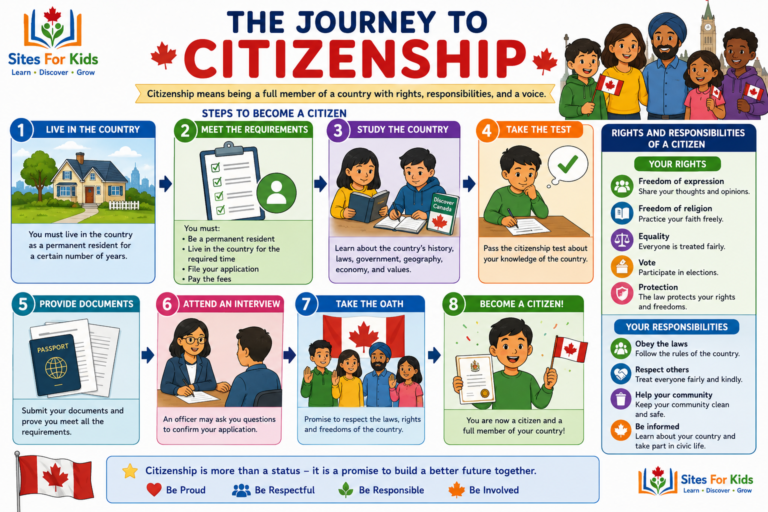
Illustrations
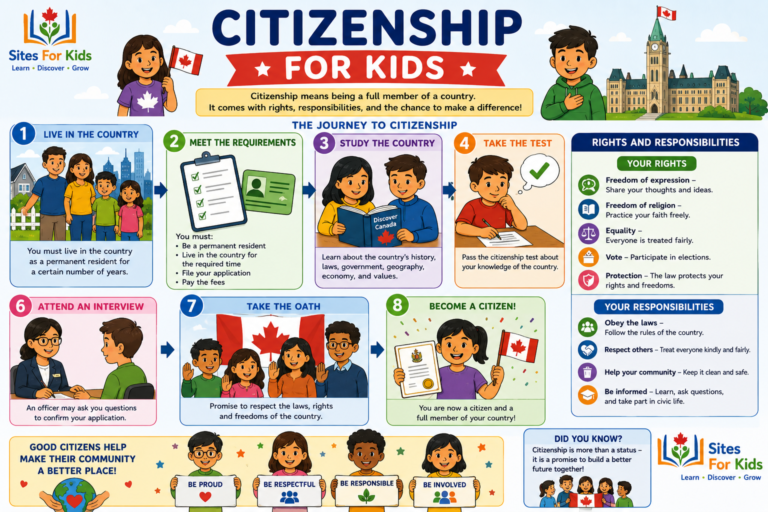
📖 Vocabulary
-
Citizen
An official member of a country
-
Rights
Freedoms protected by law
-
Responsibility
A duty expected of a citizen
-
Vote
Choosing leaders through an election
NEW Latest Videos

Learn more with latest videos

🧠 Test Your Knowledge

50 Interactive Quizzes