



Why Cultural Diversity Matters
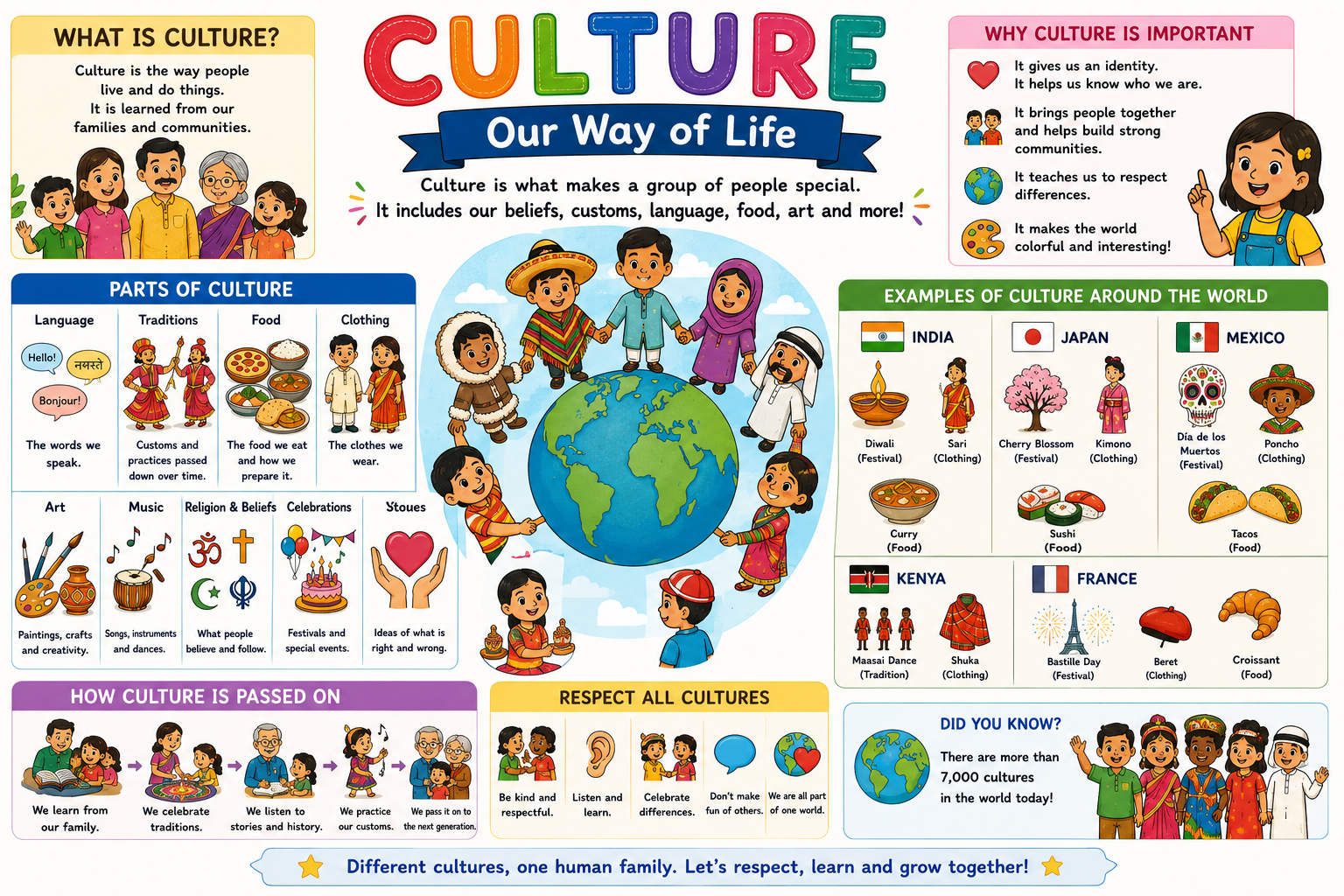
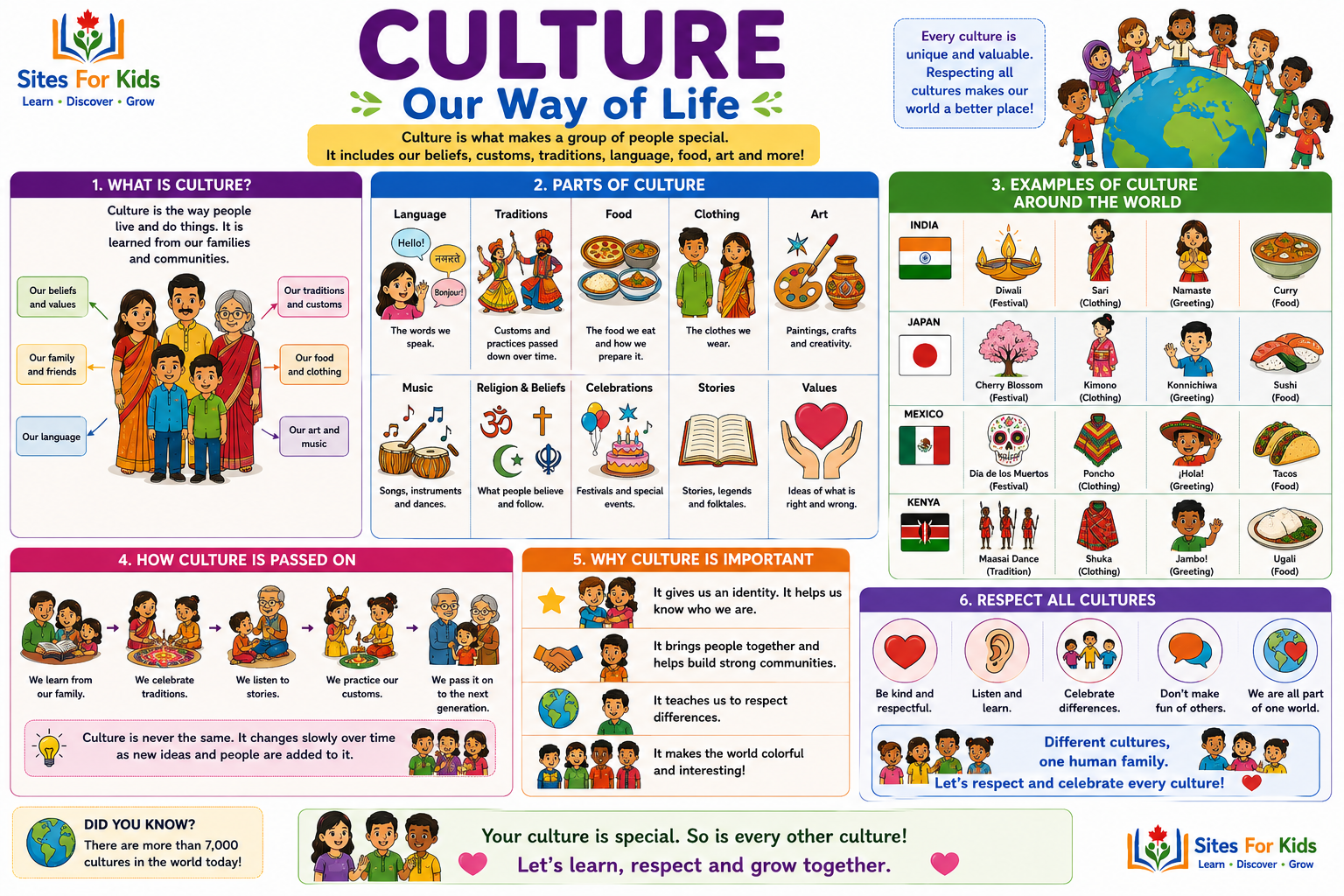
Cultural diversity means having many different cultures represented within a community, country, or group. Diversity brings a wide range of perspectives, traditions, foods, art, and ideas together, making communities richer and more interesting places to live.
When people from different cultural backgrounds live together, they often share and learn from each other’s traditions. This can lead to wonderful blending of ideas — new foods created by combining culinary traditions, new art inspired by multiple cultural influences, and stronger communities built on mutual understanding and respect.
Cultural diversity also teaches empathy and open-mindedness. When you learn about cultures different from your own, you begin to understand that there are many different, equally valid ways of living, celebrating, and viewing the world.
Respecting Different Cultures
Learning about different cultures comes with an important responsibility: respecting them. This means being curious and open-minded rather than judgmental, avoiding stereotypes, and understanding that just because a tradition is different from your own doesn’t make it less valuable or important.
It’s also important to distinguish between appreciating a culture and appropriating it. Appreciating culture means learning about, respecting, and celebrating traditions in a way that honors their origin and meaning. Being mindful and respectful when engaging with cultures other than your own is an important life skill.
Culture in Everyday Life
Culture isn’t just something found in museums or textbooks — it’s alive in everyday life. It’s in the food your family cooks, the music you listen to, the stories your grandparents tell, and the celebrations your community gathers for. Even small daily habits, like how people greet each other or what they consider polite, are shaped by culture.
Exploring Culture Around You
You don’t have to travel far to explore culture — often, culture is right in your own community. Local festivals, ethnic restaurants, community cultural centers, and even conversations with neighbors or classmates from different backgrounds can be wonderful ways to learn about and appreciate cultural diversity close to home.
Understanding culture — both your own and others’ — helps build a more connected, respectful, and curious view of the world, and it’s one of the most fascinating parts of learning about people and communities everywhere.