Canada’s Provinces and Territories
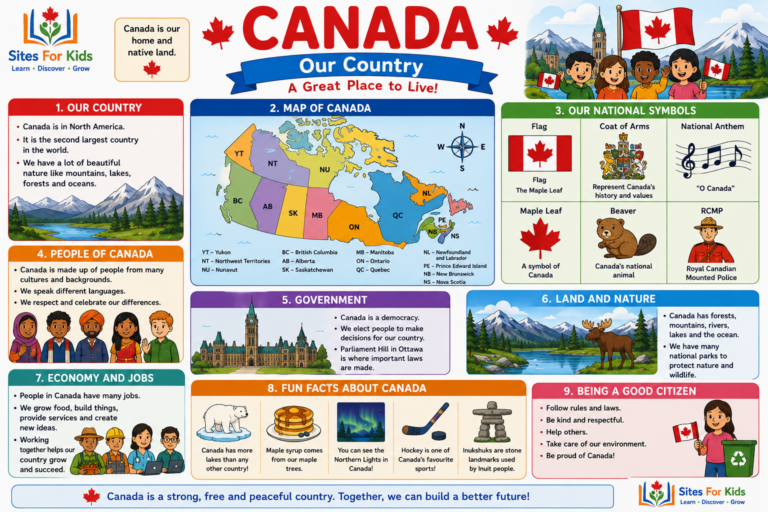
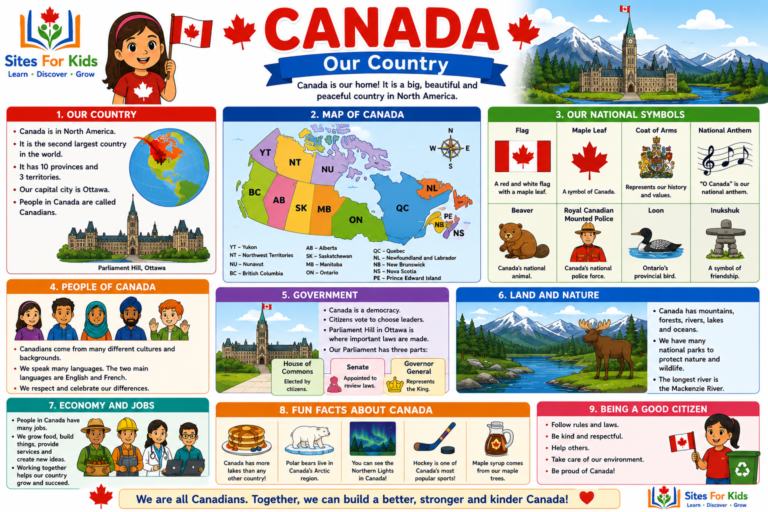
Each of Canada’s provinces and territories has its own unique geography, culture, and economy:
- Ontario is Canada’s most populous province and home to the national capital, Ottawa, as well as the country’s largest city, Toronto.
- Quebec is known for its strong French-speaking culture and history.
- British Columbia, on the west coast, is known for its mountains, forests, and Pacific coastline.
- Alberta is known for its oil industry and the Canadian Rockies.
- The Prairie provinces (Manitoba and Saskatchewan) are known for vast farmland and agriculture.
- The Atlantic provinces (Nova Scotia, New Brunswick, Prince Edward Island, and Newfoundland and Labrador) are known for their coastal fishing communities and rich maritime history.
- The territories (Yukon, Northwest Territories, and Nunavut) cover Canada’s northern regions and are home to many Indigenous communities, along with stunning Arctic landscapes.
Canada and the World
Canada is known internationally for being a peaceful, welcoming country. It’s a member of international organizations like the United Nations and works with other countries around the world on issues like trade, climate change, and human rights. Canada is also known for welcoming immigrants and refugees from many different countries, which has helped shape its multicultural identity.
Why Learning About Canada Matters
Whether you live in Canada or are simply curious about it, learning about Canada helps you understand how a large, diverse country can bring together many different people, languages, and traditions under one national identity. From coast to coast to coast, Canada’s story is one of geography, history, culture, and government all working together to create a unique and fascinating country.